
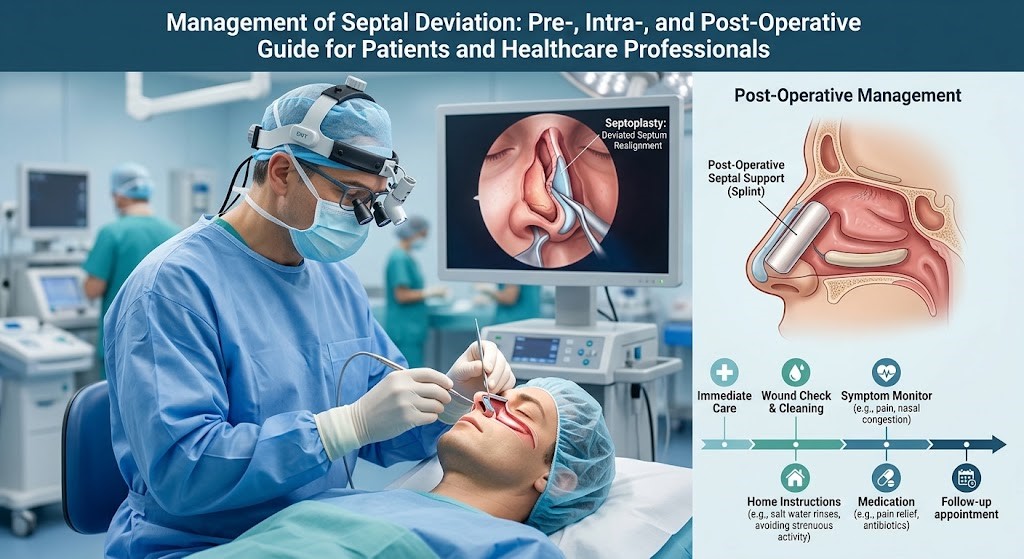
Overview of Septal Deviation
Septal deviation is a common condition where the nasal septum, the thin wall of cartilage and bone that separates the two sides of the nasal passages, is displaced or crooked. This can cause nasal obstruction, breathing difficulties, and other complications.
What is the Septal deviation?
It refers to a deviation or displacement of the nasal septum from the midline, which can cause nasal obstruction and other symptoms.
Parts of the Septum
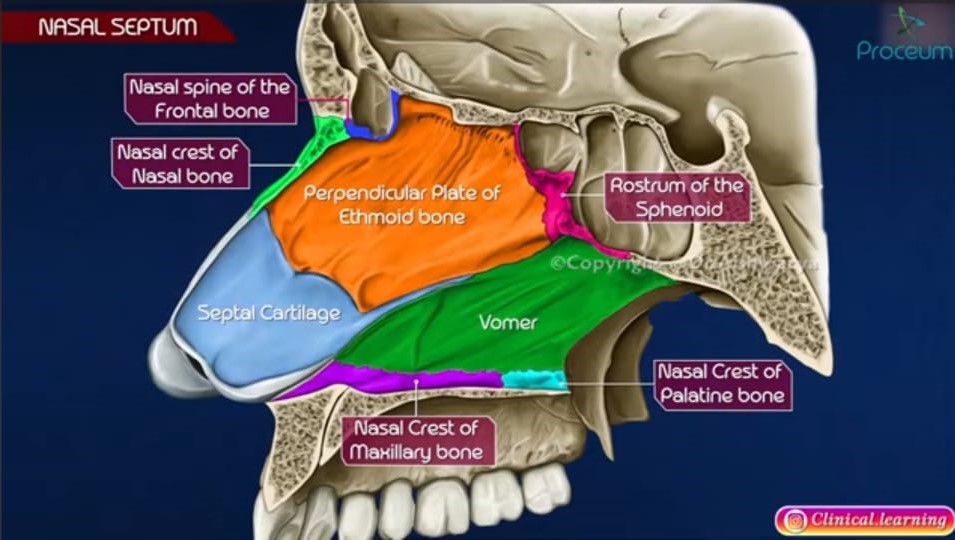
Figure 1: The parts of the Nasal Septum
Pathophysiology of Septal Pathology
Septal deviation can occur due to various factors, including:
-
Trauma
A blow to the nose can cause the septum to become deviated.
-
Developmental
Some people may be born with a deviated septum.
-
Growth
The septum can become deviated as the nose grows and develops.
Types of Septal Deviation
-
C-shaped deviation
A curvature of the septum to one side.
-
S-shaped deviation
An S-shaped curvature of the septum.
-
Bilateral deviation
Deviation of the septum on both sides of the nasal passage.
Symptoms and Signs of Septal Pathology
Symptoms
-
Nasal obstruction
Difficulty breathing through one or both nostrils.
-
Nasal congestion:
Feeling of stuffiness or blockage in the nose.
-
Loss of smell
Reduced sense of smell due to nasal obstruction.
-
Sinusitis
Recurrent sinus infections.
Signs
-
Asymmetric nasal passages
One nasal passage may appear larger than the other.
-
Deviation of the septum
Visible deviation of the septum on examination.
Investigations
-
Nasal endoscopy
A flexible or rigid endoscope is used to visualise the nasal passages and septum.
-
Imaging studies
CT or MRI scans may be used to assess the extent of the deviation and any associated sinus disease.
Complications
-
Chronic sinusitis
Recurrent or persistent sinus infections.
-
Nasal polyps
Growths in the nasal passages that can cause obstruction.
-
Sleep disorders
Sleep apnea or other sleep disorders can be exacerbated by nasal obstruction.
Management of Traumatic Septal Dislocation with Deviation
The management of traumatic septal dislocation with deviation involves reducing the dislocation and correcting the deviation.
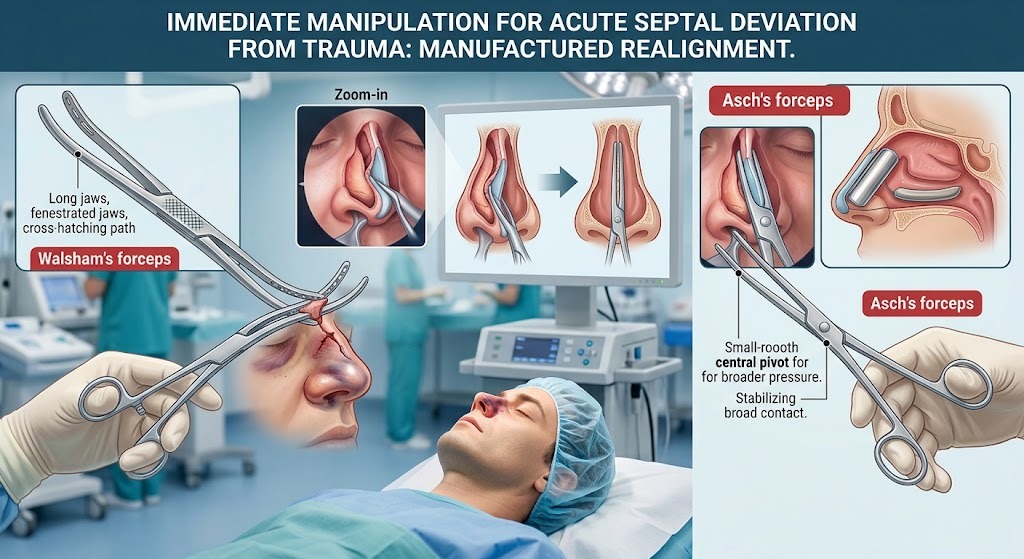
Figure 2: The Diagram of Immediate Septal Deviation Management
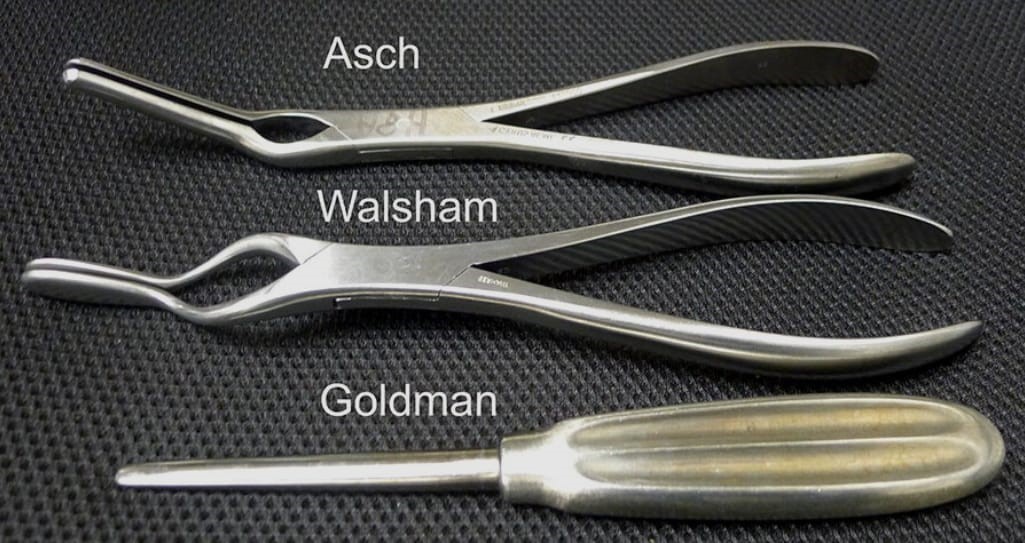
Figure 3: The Instruments for Reduction.
Step-by-Step Procedure of Reduction of Septal Dislocation with Deviation
Preparation:
The patient is prepared for the procedure, and the nasal passages are anaesthetised.
Use of Walsham and Ash's forceps
Specialised forceps are used to gently manipulate the septum and reduce the dislocation.
Manipulation of dislocation
The septum is carefully manipulated to restore its normal position.
Nasal packing or splinting
The nasal passages may be packed or splinted to support the septum and prevent re-dislocation.
Anesthesia
The procedure can be performed under local or general anaesthesia, depending on case complexity and patient preference.
Position
The patient is typically positioned in a supine position with the head elevated.
Duration of Splinting or Packing
The duration of splinting or packing varies depending on the severity of the deviation and the surgeon’s preference. Typically, the packing or splint is removed after 1-7 days.
Postoperative Management
-
Pain management
Pain relief medication is prescribed to manage postoperative pain.
-
Nasal saline irrigations
Saline irrigations are used to keep the nasal passages moist and clean.
-
Follow-up
Regular follow-up appointments are necessary to monitor healing and remove any packing or splints.
In summary,
Management of septal deviation involves thorough evaluation, reduction of the dislocation, and postoperative care to ensure optimal outcomes.
Share Post On:
Recent Posts
Categories
Get in Touch
Read doctor-produced health and medical information written for you to make informed decisions about your health concerns.
Address
Adenta
info@grovehealth.net
Working Hours
Mon - Friday @ 8am - 5 pm