
Overview of AI Tools In Modern ORL Practice
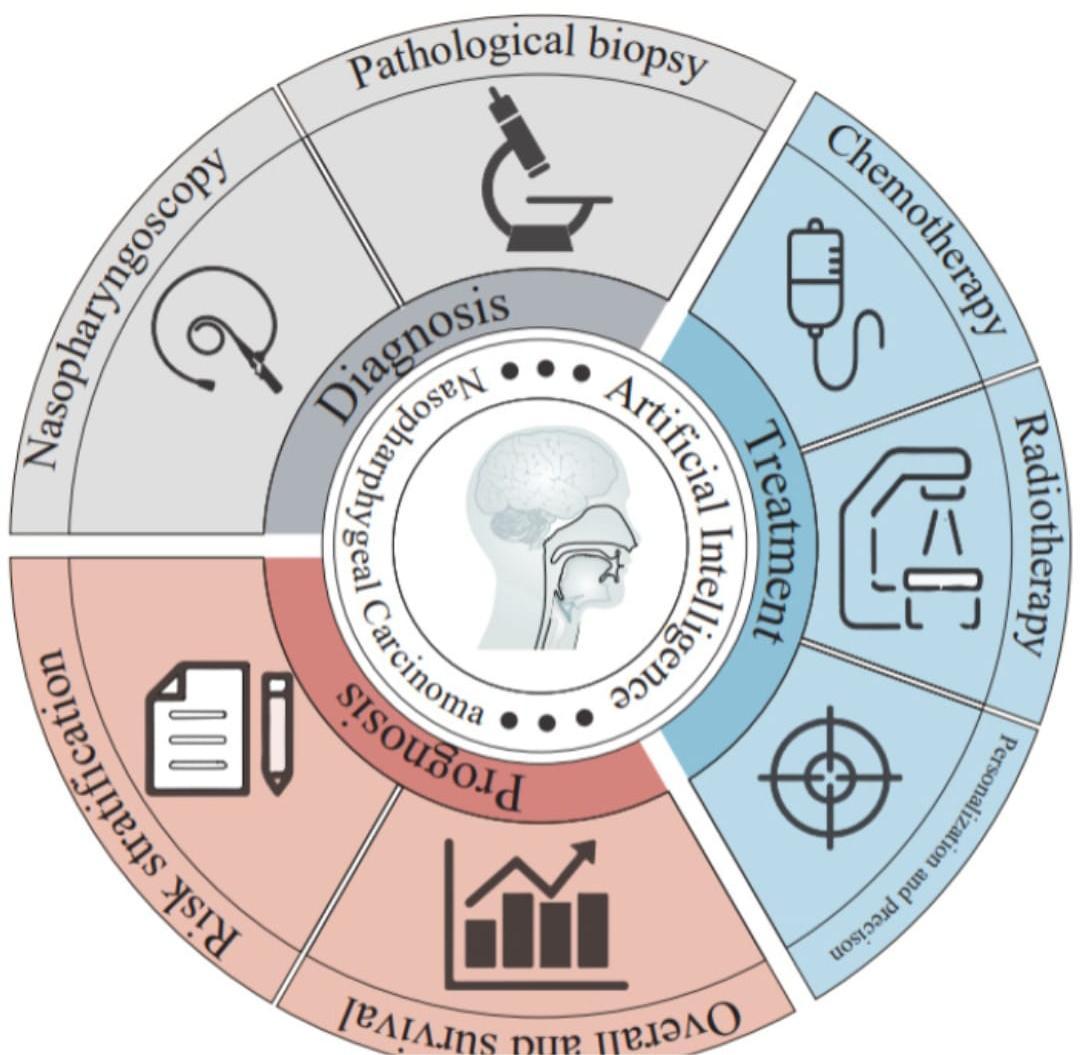
Otorhinolaryngology (ENT)
ChatGPT
AI powered chatbot for patient education and clinical decision support.
Claude 3
AI tool for diagnosis and therapy of head and neck cancer.
Radiomics
AI powered analysis of medical images for diagnosis and prognosis.
Computer Vision
Artificial Intelligence, AI 9 powered analysis of images and videos for diagnosis and treatment planning.
ChatGPT practice and leveraging on EMR
The integration of AI tools like ChatGPT in otorhinolaryngology (ENT) practice is transforming patient care, diagnostics, and treatment planning. This article explores ChatGPT’s applications, benefits, and challenges in ENT.
Historical Perspective
The use of AI in medicine dates back decades, but ChatGPT represents a leap forward with its natural language processing (NLP) capabilities. Initially used for text analysis, ChatGPT's potential in healthcare, including ENT, is being rapidly explored.
What is ChatGPT?
ChatGPT is an AI-powered language model designed to understand and generate human-like text. In ENT, it aids in clinical decision-making, patient communication, and more.
Applications in ENT Areas
-
1. Patient Consultation & Education:
ChatGPT provides information on conditions, treatments, and post-op care.
-
2. Clinical Decision Support:
Suggests differential diagnoses, tests, or treatment options.
-
3. Documentation & EMR:
Helps with note-taking, summaries, and coding.
Use in Diagnosis
- Assists in analyzing symptoms (e.g., dizziness, hearing loss) and suggesting possible causes.
- Triages patients based on urgency.
- Supports less-experienced clinicians with diagnostic guidance.
Use in Treatments
- Offers treatment guidelines for common ENT conditions (e.g., tonsillitis, sinusitis).
- Suggests personalized treatment adjustments based on patient history.
- Aids in counseling on surgical risks/benefits.
Advantages
-
1. Efficiency:
Speeds up consultations, documentation.
-
2. Accessibility:
Improves patient access to information.
-
3. Decision Support:
Augments clinician judgment.
Limitations
-
1. Accuracy Risks:
May provide outdated/inaccurate info if not updated.
-
2. Loversight Needed:
Clinicians must verify AI suggestions.
-
3. Language Barriers:
May struggle with complex medical jargon.
Medicolegal Implications
-
1. Liability:
Who’s responsible for AI-driven advice?
-
2. Data Privacy:
Ensuring HIPAA compliance with patient data.
-
3. Informed Consent:.
Clarifying AI’s role in care decisions.
To conclude: ChatGPT shows promise in enhancing ENT practice through efficiency and support. However, it’s not a replacement for clinical judgment—careful integration and oversight are key.
CLAUDE 3 practice
Claude 3 is an AI tool leveraging NLP to understand and generate human-like text, aiding clinicians in tasks such as documentation, diagnostics, and patient communication.
Applications in ENT Areas
-
1. Patient Interaction:
Providing detailed explanations of ENT conditions (e.g., tonsillitis, hearing loss).
-
2. Documentation:
Generating consultation notes or summarizing patient histories.
-
3. Research & Education:
Assisting in literature reviews or creating educational materials for patients.
Diagnosis in ENT Disorders
- Supports differential diagnosis by analyzing symptoms (e.g., vertigo in BPPV vs. Meniere’s disease).
- Flags critical symptoms in clinical notes (e.g., unilateral hearing loss and urgent MRI referral).
Treatments of ENT Disorders
- Recommends evidence-based treatments (e.g., nasal steroids for chronic rhinitis).
- Assists in surgical planning (e.g., endoscopic sinus surgery approaches).
Advantages
-
1. Efficiency:
Reduces administrative burden, allowing more patient-focused care.
-
2. Decision Support:
Highlights potential diagnoses and treatment pathways.
-
3. Accessibility:
Simplifies complex medical jargon for patients.
Limitations
-
1. Accuracy:
Errors can occur if data input is incomplete.
-
2. Clinical Oversight:
Requires validation by ENT specialists.
-
3. Data Privacy:
Ensuring compliance with regulations (e.g., HIPAA).
Medicolegal Implications
-
1. Liability:
Clinicians are responsible for AI-generated advice.
-
2. Informed Consent:
Patients should understand AI’s role in their care.
-
3. Documentation:
AI notes must be reviewed and verified.
To conclude: Claude 3 holds promise in ENT practice, enhancing efficiency and care delivery. However, its integration requires careful balancing of AI support with clinical expertise and adherence to ethical and legal standards.
RADIOMICS
Radiomics, the extraction and analysis of quantitative features from medical images, is revolutionizing healthcare. In otorhinolaryngology (ENT), Radiomics offers new insights into diagnosis, treatment planning, and prognosis, enhancing personalized patient care.
Historical Perspective
Radiomics emerged as a field in the early 2010s, driven by advances in imaging and computational power. Initially applied in oncology, its applications now extend to various specialties, including ENT.
What is Radiomics?
Radiomics involves extracting high-throughput quantitative data from medical images (e.g., CT, MRI, PET) to identify patterns that may not be visible to the human eye, aiding clinical decision-making.
Applications in ENT Areas
-
1. Tumor Characterization:
Differentiating benign vs. malignant lesions (e.g., parotid tumors).
-
2. Nodal Staging:
Assessing lymph node metastasis in head and neck cancers.
-
3. Treatment Response:
Predicting outcomes in patients undergoing radiotherapy or chemotherapy.
Diagnosis in ENT Disorders
-
1. Head and Neck Cancers:
Radiomics helps identify tumor aggressiveness and histological subtypes.
-
2. Sinusitis:
Distinguishing chronic rhinosinusitis phenotypes based on imaging patterns.
-
3. Temporal Bone Pathology:
Analyzing subtle changes in middle ear structures.
Treatment of ENT Disorders
-
Radiotherapy Planning:
Target delineation and predicting radiation toxicity.
-
Surgical Guidance:
Preoperative assessment of tumor extent (e.g., glolubectomy).
-
Personalized Medicine:
Tailoring therapies based on Radiomic profiles.
Advantages
-
1. Non-Invasive:
Extracts data from routine imaging, adding value without extra procedures.
-
2. Precision:
Uncovers subtle imaging patterns missed by visual analysis.
-
3. Prognostic Value:
Predicts outcomes, improving patient stratification.
Limitations
-
Data Standardization:
Variability in imaging protocols affects reproducibility.
-
Interpretability:
Complex models may lack clear biological correlation.
-
Overfitting:
Risk of spurious correlations in small datasets.
Medicolegal Implications
-
Validation:
Requires rigorous testing before clinical use.
-
Liability:
Clinicians are responsible for integrating Radiomics into care plans.
-
Informed Consent:
Patients should understand Radiomics’ role in their treatment.
To conclude: Radiomics is a promising tool in ENT, enhancing diagnosis, treatment planning, and research. However, standardization, validation, and careful clinical integration are essential to maximize its potential.
COMPUTER VISION
Computer Vision, a field of artificial intelligence (AI) that enables computers to interpret visual data, is transforming healthcare. In otorhinolaryngology (ENT), Computer Vision offers innovative solutions for diagnosis, treatment, and patient care.
Historical Perspective
Computer Vision's roots trace back to the 1960s, but recent advances in deep learning have propelled its applications in medicine, including ENT.
What is Computer Vision?
Computer Vision involves algorithms analyzing and interpreting medical images or videos (e.g., endoscopy, microscopy) to extract clinically relevant information.
Applications in ENT Areas
-
1. Endoscopic Imaging:
Analyzing laryngeal, nasal, or ear images for abnormalities.
-
2. Surgical Guidance:
Assisting in intraoperative navigation (e.g., sinus surgery).
-
3. Telemedicine:
Remote assessment of ear infections or vocal cord lesions.
Diagnosis in ENT Disorders
-
1. Lesion Detection:
Identifying vocal cord polyps or early laryngeal cancers in endoscopy videos.
-
2. Middle Ear Analysis:
Detecting otitis media or cholesteatoma in otoscopic images.
-
3. Nasal Pathology:
Classifying polyps vs. tumors in sinus CT/MRI.
Treatment of ENT Disorders
-
Surgical Precision:
Real-time image analysis during procedures (e.g., tumor resection).
-
Rehabilitation:
Tracking vocal cord movements for speech therapy.
-
Prosthetics:
Customizing hearing aid fittings using ear shape analysis.
Advantages
-
1. Accuracy:
Enhances detection of subtle abnormalities.
-
2. Efficiency:
Assists clinicians in real-time, reducing errors.
-
3. Accessibility:
Expands expert-level care via telemedicine.
Limitations
-
Data Quality:
Performance depends on image resolution and lighting.
-
Training Needs:
Requires diverse, annotated datasets.
-
Interpretability:
Black box nature may hinder trust.
Medicolegal Implications
-
Validation:
Must meet regulatory standards (e.g., FDA clearance).
-
Liability:
Clinicians are responsible for AI-assisted decisions.
-
Consent:
Patients should understand AI’s role in their care.
To conclude: Computer Vision is a powerful tool in ENT, improving diagnostics and treatment. With careful validation and ethical use, it can enhance patient outcomes and streamline care.
Share Post On:
Recent Posts
-
Overview of AI Tools In Modern ORL Practice
-
Nuggets of ORL-LARYNGOLOGY
-
All You Need To Know About PET Scan
-
Nuggets of ORL-PAEDIATRICS
-
Nuggets of ORL-OTOLOGY
-
Nuggets of ORL-RHINOLOGY
-
Nuggets of Otorhinolaryngology-Basic sciences
-
Anatomy of the Muscles of the Soft Palate
-
Ethmoidal Arteries Ligation for Epistaxis
-
Submucous Cleft Palate (SMCP)
-
Approach to Ligation of the External Carotid Artery
-
Approach to Managing a 3-Year-Old Boy with a Foreign Body in the nasal cavity.
-
Approach to Managing a 3-Year-Old Boy with a Foreign Body impacted in the ear canal.
-
Endoscopic Sphenopalatine Artery Ligation (ESPAL) for Epistaxis
-
Surgical Management of Epistaxis
-
Technique of Incision and Drainage of Septal Hematoma/Septal Abscess
-
Upper Aerodigestive Tract Foreign Body Impaction
-
Incision and Drainage of Hematoma Auris
-
Rigid Bronchoscopy for Retrieval of Foreign Bodies in Children
-
Foreign Body Impaction in the Larynx, Trachea, and Bronchi
-
Leadership Position is a Tool, not a Trophy
-
Carcinoma of the Oropharynx
-
Peritonsillar Abscess
-
Ethics of Doctor-Patient Relationship
-
Doctor-Patient Relationship Case Scenarios
-
Asymmetrical Tonsils and Approach to Evaluation and Management
-
Nasal Polyposis
-
Rigid Oesophagoscopy and Complication
-
Anatomy of Oesophagus
-
Stridor, Snoring, Stertor And Wheezing: How They Compare
-
Temporomandibular Joint (TMJ)
-
Otoacoustic Emissions
-
Tympanometry
-
Functional Endoscopic Sinus Surgery (FESS)
-
Tracheostomy
-
Clinical Voice Test (CVT) for Hearing Loss
-
Acute Epiglottitis And Approach To Management
-
Synoptic Overview Of Nasopharyngeal Carcinoma
-
Prioritizing Support For People With Disabilities Over Unhealthy Competitions That Marginalise The Downtrodden
-
Otitic Barotrauma
Categories


Get in Touch
Read doctor-produced health and medical information written for you to make informed decisions about your health concerns.